Anthropic, an artificial intelligence company, has agreed to pay $1.5 billion to settle with the tort authors. The suit was filed by several authors and charged Anthropic with the theft of his work to train AI models. According to the plaintiff ‘ s counsel, if the San Francisco Federal Court approved the agreement, it would be the largest copyright settlement ever reported.
This settlement took place two months after the San Francisco Federal Court ruled that “the use of books to train AI is not a violation of the American Copyright Act”, but at that time the judge ordered Anthropic to stand trial for his use of pirated material. On Friday, Anthropic stated that the settlement would “resolve all historical copyright claims filed by the plaintiff”.
A number of technology giants, including GathGPT developers OpenAI, Microsoft and Instagram parent Meta, are facing similar copyright infringement suits. And Anthony, who received the investment of Alphabet, the Amazon and Google parent company, has always called himself a “moral AI competitor” with his Claude chat robot.
“We remain committed to the development of a security AI system that will help humans and organizations expand their capabilities, promote scientific discovery and solve complex problems.”
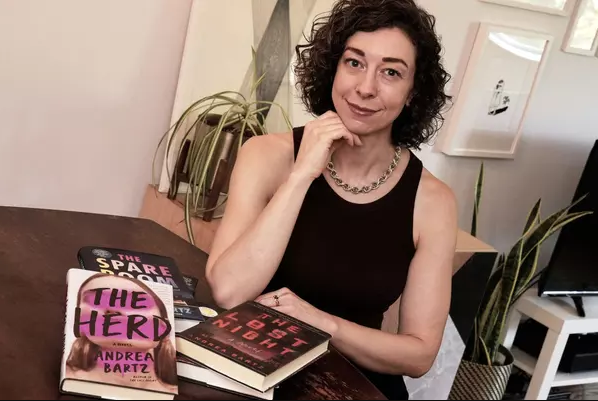
The case was jointly raised last year by Andrea Bates, the best-seller horror novelist, Charles Greber, author of Conscience Nurse, and Kirk Wallace Johnson, author of Meeting the Bird of Heaven. The plaintiff accused Anthropic of stealing his work to train Claude chat robots to build billions of dollars worth of business.
According to a June court ruling, the central stock of Anthropic had over 7 million pirated books, each of which was subject to compensation of up to US$ 150,000. The decision was one of the first judicial opinions to define how large language models could legally learn from existing materials, finding that the use of the author’s work by Anthropic was “very transformative” and therefore in conformity with United States law, but the judge also rejected Anthropic’s request for removal.
According to the original plan, Anthropic should have been approved in December for the construction of the database using pirated materials. Counsel for the plaintiffs claimed that the settlement was “the milestone of the AI era was the agreement”, and counsel Justin Nielson stated: “The settlement would provide substantial compensation for each of the works involved and set a precedent for the payment of copyright fees by AI. This sends a strong signal to the industry and creators of AI that the acquisition of copyrighted works from pirated websites is unacceptable.”
Alexander Young, Professor of Management Science Operations, London Business School, stated that this time reconciliation or promotion of cooperation between AI developers and creators: “The fresh training data created by humans are indispensable. If we want to expand the copyright of the content generated by AI, we need to improve the compensation mechanisms for the contribution to the original human creation.”